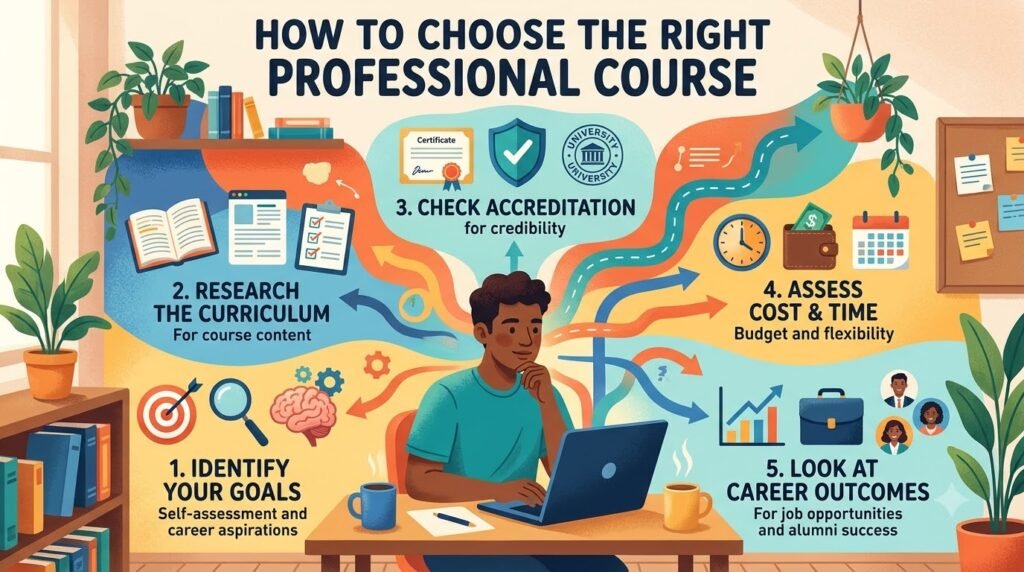
How to Choose the Right Professional Course (Without Wasting Money or a Year)
Table of Contents Here’s how it usually goes. Someone sees an ad for a course. A friend mentions that a cousin got a job after doing something similar. A week later they’ve paid the fee. Three months on, they have a certificate in their inbox and no real idea what to do with it. The course often wasn’t even bad. It just wasn’t chosen for a reason. If you’re trying to work out how to choose the right professional course, the trick is to stop starting with courses at all. Start with yourself, then the job market, and only then look at what’s being sold. How to Choose the Right Professional Course for Your Career Goals Try finishing this sentence: “After this course, I want to ___.” Before enrolling, take some time to evaluate your career plans and learning needs. Knowing how to choose the right professional course can help you avoid unsuitable programs and focus on training that develops the skills you need for your chosen career “Get a better job” doesn’t count. It’s too fuzzy to test anything against. “Move from manual testing into automation” works. So does “qualify to sign off accounts at my firm” or “apply for project manager roles instead of coordinator roles. As a digital marketer, I believe that a strong online presence and effective digital marketing strategies are essential for business growth. Explore more insights and updates on my website https://jincyy.com Your answer matters because the three most common goals need very different courses. If you’re a fresh graduate or changing careers, you need depth and something to show for it, like projects you can put in front of an employer. If you’re already in a field and chasing a promotion, a recognised credential may matter more than anything else. And if you just need one new skill to stay useful at work, a short focused program is plenty. Paying for a year-long program to learn one tool is a classic mistake. When deciding how to choose the right professional course, consider your interests, current qualifications, and long-term career goals. This will help you select a course that suits your needs. Choosing the right professional course requires you to understand your strengths, interests, and the skills needed for your preferred career. Take time to compare different courses before making your final decision. Go read some job postings This takes an hour and saves a lot of regret. According to the U.S. Bureau of Labor Statistics, researching career opportunities and job outlook can help you make informed career decisions. Open a job portal, search for the role you want, and read ten or fifteen postings properly. Keep a running list of what keeps showing up: tools, certifications, years of experience. Then put that list next to the course syllabus. If the syllabus covers most of it, good. If you can barely match anything, the course may be teaching something employers don’t ask for. It’s also worth finding two or three people already doing the job and checking what they studied. Most are happy to answer a short, polite message. Asking “did that course actually help you get hired?” will tell you more than any brochure. When deciding how to choose the right professional course, compare the skills employers expect with what each course teaches. This will help you identify programs that match your career plans rather than choosing one based only on popularity. Be honest about where you’re starting Courses come with assumptions. Some expect you to already know the basics, and if you don’t, you’ll spend the first month lost and the second month quitting. Read the prerequisites, and look at what the first two weeks cover. That’s usually where you find out whether it’s pitched at you. Time is the other thing people overestimate. A course that says “six months” might mean twelve hours a week, and twelve hours after a full workday is a very different thing from twelve hours on paper. Be realistic about your evenings. And think about how you actually learn. If you’ve started self-paced courses before and let them die, don’t sign up for another one just because it’s cheap. Fixed class times and a cohort cost more, but plenty of people only finish when someone is expecting them to show up. Look inside the course itself Once you’re down to two or three options, get specific. Start with the syllabus. If it lists tools that were popular years ago, or it clearly hasn’t changed in ages, that’s a bad sign. You want hands-on work: projects, case studies, assessments you actually have to complete. A course that’s all lectures and a multiple-choice quiz rarely leaves you able to do much. Before choosing a course, take time to understand how the training matches your career plans. Knowing how to choose the right professional course involves checking the syllabus, practical training, and skills you will gain. Then check the instructors. Search their names. People who work or have worked in the field tend to teach what matters on the job, not just what’s in the textbook. Another important factor in choosing the right professional course is understanding which skills employers are looking for in your chosen industry. Credentials need a closer look too. Who actually issues the certificate: a university, a professional body, or just the training company? For regulated fields like accounting, law, or healthcare, this isn’t optional, and you should confirm recognition with the official body rather than taking the provider’s word for it. Placement claims deserve suspicion. “Our students get placed at top companies” means very little until you ask which companies, in what roles, and how many students out of the total. A good provider answers that easily. A shaky one changes the subject. Testimonials on the provider’s own site are marketing, so read them that way. Finally, How to Choose the Right Professional Course ask what happens when you get stuck. Doubt-clearing sessions, a mentor, a community: this matters a lot more than